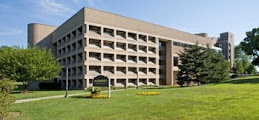
Pace Law Library, in addition to its extensive law collection, also has a not so shabby Law in Film Collection. The idea is to collect movies with law/legal theme, though occasionally a not so law or legal related movie slips in. In any instance, you should check it out. The collection is located on the main floor of the law library, behind the reference desk. All movies in this collection do circulate, so our patrons can check them out for up to five days. And although we don't have as extensive variety as for example Netflix does, we do have some great titles and it is free for our patrons.
The following are some of our newest additions:
The Name of the Rose; The Constant Gardener; Wall Street; Passport to Pimlico; Cry Freedom; Earth;
The Art of the Steal; Presumed Guilty; Capturing the Friedmans; The Andersonville Trial; Simple Justice; Nichts als die Wahreit (After the Truth); Sicko; American Violet; Gran Torino; and many more.
Tuesday, October 26, 2010
Friday, October 22, 2010
National Lead Poisoning Prevention Week
The EPA has announced National Lead Poisoning Prevention Week for October 24-30th in order to raise awareness of the risks associated with childhood lead exposure. According to recent statistics,
National Lead Poisoning Prevention Week Toolkit
EPA Lead FAQ
For further reading see:
Lead Renovation Repair & Painting Rule, 73 Fed. Reg. 21,692 (Apr. 22, 2008) (to be codified at 40 C.F.R. pt. 745).
Alan Kaminsky et al., The Lawyers Guide to Lead Paint, Asbestos, and Chinese Drywall (2010).
Montrece McNeill Ransom et al., Toward Eradication: How Law and Public Health Practices Can be Used to Prevent Childhood Lead Poisoning, 22 Tulane Envtl. L.J. 1 (2008).
John S. Gray et al., Negligence in the Air? Should Alternative Liability Theories Apply in Lead Paint Litigation, 25 Pace Envtl. L. Rev. 147 (2008).
Peter G. Earle et al., Negligence in the Paint: The Case for Applying the Risk Contribution Doctrine to Lead Litigation- A Response to Gray & Faulk, 25 Pace Envtl. L. Rev. 179 (2009).
Lead paint poisoning affects more than 1 million children today. The Centers for Disease Control and Prevention estimate that nearly 250,000 children living in the United States have blood lead levels high enough to require public health intervention, based on data from a 2003–2004 national survey.For general information see:
National Lead Poisoning Prevention Week Toolkit
EPA Lead FAQ
For further reading see:
Lead Renovation Repair & Painting Rule, 73 Fed. Reg. 21,692 (Apr. 22, 2008) (to be codified at 40 C.F.R. pt. 745).
Alan Kaminsky et al., The Lawyers Guide to Lead Paint, Asbestos, and Chinese Drywall (2010).
Montrece McNeill Ransom et al., Toward Eradication: How Law and Public Health Practices Can be Used to Prevent Childhood Lead Poisoning, 22 Tulane Envtl. L.J. 1 (2008).
John S. Gray et al., Negligence in the Air? Should Alternative Liability Theories Apply in Lead Paint Litigation, 25 Pace Envtl. L. Rev. 147 (2008).
Peter G. Earle et al., Negligence in the Paint: The Case for Applying the Risk Contribution Doctrine to Lead Litigation- A Response to Gray & Faulk, 25 Pace Envtl. L. Rev. 179 (2009).
Tuesday, October 19, 2010
Legal Briefs: Eight local law professors urge legalization of marijuana -- Wash. Post
A group of law faculty from American, Georgetown, George Mason and George Washington universities have come out in support of California's Prop. 19. They argue that "the present policies toward marijuana to be bankrupt, and urge their rethinking."
Friday, October 1, 2010
Pace Law School phasing out part-time evening program
The rumors are true. Dean Michelle Simon sent out a letter to alumni this week confirming that after this fall there will be no more part-time evening program. Dean Simon writes
I hope this is true, but as a 2003 graduate of the evening program at Pace Law School, I am sorry to see it go. I understand the decision but don't agree with it. Evening students participate in so many aspects of law school life, e.g. moot court and law review, and bring unique life experience to the classroom. Many evening program students I know would not have been able to attend law school were it not for the part-time evening program. I'll miss the interesting students it brought to the law school.
To other Pace Law alums and current students--what do you think?
There has been, however, a confluence of factors over the years that has caused us to re-evaluate our evening program and nudged us toward the conclusion that under the circumstances, those resources need to be reallocated so that the law school can continue to evolve in non-traditional and flexible ways. ... While we are sorry to be letting go of a program that has been a touchstone of the Pace Law legal experience, and has resulted in a cohort of such talented, successful, and supportive alumni, we are confident that the benefits far outweigh the losses and will result in your Pace Law degree becoming even more valuable.
I hope this is true, but as a 2003 graduate of the evening program at Pace Law School, I am sorry to see it go. I understand the decision but don't agree with it. Evening students participate in so many aspects of law school life, e.g. moot court and law review, and bring unique life experience to the classroom. Many evening program students I know would not have been able to attend law school were it not for the part-time evening program. I'll miss the interesting students it brought to the law school.
To other Pace Law alums and current students--what do you think?
Friday, September 24, 2010
Humbach on Sexting and the First Amendment
Sexting - a word that is becoming part of our vocabulary; a behavior most common among teenagers; a growing phenomena. But what exactly is sexting? Oxford Dictionary online does not have a readily available definition yet, so I turned to online Wikipedia.
To learn more, please join Prof. John Humbach and Prof. Bridget Crawford, both from Pace Law School, as they discuss the implications of sexting and the First Amendment in the library's recent podcast titled Humbach on "Sexting" and the First Amendment. Prof. Humbach, in his article, "Sexting" and the First Amendment, writes that "[g]iven the reality of changing social practices, mores, and technology utilization, today's pornography laws are a trap for unwary teens and operate, in effect, to criminalize a large fraction of America's young people."
Article Citation
John Humbach, "Sexting" and the First Amendment, 37 Hastings Const. L. Q. 433 (2010).
To view and listen to more of our podcasts, click here.
Sexting is the act of sending sexually explicit messages or photographs, primarily between mobile phones. [Wikipedia]
To learn more, please join Prof. John Humbach and Prof. Bridget Crawford, both from Pace Law School, as they discuss the implications of sexting and the First Amendment in the library's recent podcast titled Humbach on "Sexting" and the First Amendment. Prof. Humbach, in his article, "Sexting" and the First Amendment, writes that "[g]iven the reality of changing social practices, mores, and technology utilization, today's pornography laws are a trap for unwary teens and operate, in effect, to criminalize a large fraction of America's young people."
Article Citation
John Humbach, "Sexting" and the First Amendment, 37 Hastings Const. L. Q. 433 (2010).
To view and listen to more of our podcasts, click here.
Labels:
First Amendment,
John Humbach,
Pace Law School,
sexting,
teens
Friday, September 17, 2010
A Uniform Bar Exam?
From the ABA Journal: ABA's Council of the Section of Legal Education and Admissions to the Bar adopted a resolution supporting a Uniform Bar Exam to be administered in every state of the United States.
One nation, one bar exam. What do you think?
In April, Missouri became the first state to adopt the Uniform Bar Examination, and the National Conference of Bar Examiners reported in June that North Dakota was the second state to do so.
Other jurisdictions considering the idea include Arizona, Colorado, Minnesota, New Hampshire and Washington, D.C.
Even states that adopt the UBE would still continue to conduct their own bar exams, which could include testing on that individual state's law. However, the UBE would allow lawyers to transfer a standard bar exam score between jurisdictions.
One nation, one bar exam. What do you think?
Labels:
American Bar Association,
bar exam,
uniform bar exam
Wednesday, September 15, 2010
Completely Legal
Yesterday was primary day here in New York, and I hope that everyone who voted in the primary had a good experience with the new voting system. I got so much ink on my hands from the pen that they gave me to fill in the circles on the paper ballot, that it made a smudge on the ballot. Fortunately, it was not enough of a smudge to be mistaken for an errant vote, and I escaped the polling place in under 10 minutes, having done my civic duty successfully.
I bring this up because, in my quest to find out who prevailed in the local primaries, I remembered that LoHud.com, the online version of our local newspaper, The Journal News, has a legal blog. Completely Legal: Go Behind the Bench to Examine the Courts and Cases in the Lower Hudson Valley is where I learned who will be running in the Westchester County and Family Court judicial elections which will be taking place in November. Completely Legal is written by Journal News reporters, and is a good place to go for updates on some of the notable cases taking place in the Lower Hudson Valley. You can subscribe to Completely Legal via RSS feed or email updates.
Celebrating 40 Years of the Clean Air Act
In honor of its anniversary the U.S. EPA has recently announced that it is celebrating 40 years of its accomplishments under the Clean Air Act (CAA).
In the spirit of this celebration here are some resources discussing the history of the Clean Air Act.
Paul G. Rogers, The Clean Air Act of 1970, E.P.A. J., Jan.-Feb. 1990
Roy S. Belden, Clean Air Act 5-10 (2001)
Michael R. Barr, Introduction to the History of the Clean Air Act: History, Perspective and Direction for the Future, in The Clean Air Act Handbook 1, 4-7 (Robert J. Martinaeu, Jr. & David P. Novello eds., 2d ed. 2004)
"For 40 years the Clean Air Act has protected our health and our environment, saving lives and sparking new innovations to make our economy cleaner and stronger. The common sense application of the act has made it one of the most cost-effective things the American people have done for themselves in the last half century,” said EPA Administrator Lisa P. Jackson. “Since 1970 we have seen a steady trajectory of less pollution in our communities and greater economic opportunity throughout our nation. We will continue those trends as we face the clean air challenges of the next 40 years, including working to cut greenhouse gases and grow the American clean energy economy. The Clean Air Act proves the naysayers wrong – we can protect our health and environment at the same time we grow our economy."
In the spirit of this celebration here are some resources discussing the history of the Clean Air Act.
Paul G. Rogers, The Clean Air Act of 1970, E.P.A. J., Jan.-Feb. 1990
Roy S. Belden, Clean Air Act 5-10 (2001)
Michael R. Barr, Introduction to the History of the Clean Air Act: History, Perspective and Direction for the Future, in The Clean Air Act Handbook 1, 4-7 (Robert J. Martinaeu, Jr. & David P. Novello eds., 2d ed. 2004)
Tuesday, September 7, 2010
New and Updated Legal Research Guides from the Library
Legal Research is an important skill that is acquired in law school and perfected over time. At times, we all are required to do a research in an unfamiliar area. To get you started and educated on an unfamiliar subject, it is helpful to consult a research guide. The Pace Law Library compiles research guides on various topics and the following are those that have been recently added or updated. Click here to view all 35 research guides compiled by Pace Law Library.
Elder Law Resources
A guide to online resources, including federal and state law, specific issues, journals and newsletter, and more.
Business and Corporate Law Research
Research in the law of corporations and other business entities involved learning not just about corporate law, but also the law of agency, partnerships, limited liability companies, and other business structures.
Legal News
this guide contains a wide variety of RSS feeds from legal blogs and news sites.
Legislative History Research Guide
The legislative history of a law is comprised of the documents created during deliberations leading to the law's enactment. They are used to determine the legislature's intended purpose and to clarify any ambiguities in the statutory language.
Federal Administrative Decisions and Resources
Guide to federal administrative agencies, including links to decisions and regulations, along with the mission statement of each agency.
New York Legal Research
This guide provides links to primary sources of law and government websites for New York, New York City, and Westchester County.
Guide for Law Review Members
This guide will assist students who serve on the three Pace law review. It provides a basic overview of cite checking, circulation policies, and interlibrary loan request procedures.
Land Use Law Research
This guide will assist you in researching local land use laws.
Elder Law Resources
A guide to online resources, including federal and state law, specific issues, journals and newsletter, and more.
Business and Corporate Law Research
Research in the law of corporations and other business entities involved learning not just about corporate law, but also the law of agency, partnerships, limited liability companies, and other business structures.
Legal News
this guide contains a wide variety of RSS feeds from legal blogs and news sites.
Legislative History Research Guide
The legislative history of a law is comprised of the documents created during deliberations leading to the law's enactment. They are used to determine the legislature's intended purpose and to clarify any ambiguities in the statutory language.
Federal Administrative Decisions and Resources
Guide to federal administrative agencies, including links to decisions and regulations, along with the mission statement of each agency.
New York Legal Research
This guide provides links to primary sources of law and government websites for New York, New York City, and Westchester County.
Guide for Law Review Members
This guide will assist students who serve on the three Pace law review. It provides a basic overview of cite checking, circulation policies, and interlibrary loan request procedures.
Land Use Law Research
This guide will assist you in researching local land use laws.
Alexander Greenawalt On Radovan Karadzic
Alexander Greenawalt, Associate Professor of Law at Pace University School of Law, regularly contributes to the New York Time microblog: Latets on Radovan Karadzic. Check out the latest contribution. You may also subscribe to the latest updates via RSS feed.
Subscribe to:
Posts (Atom)